
ELECTRICAL ENGINEERING
Establishment Year : 1996 I Intake: 60 I Duration of Course: 4 Years
Vision
To be recognized as an international leader in engineering education, research and the application of knowledge to benefit society globally.
Mission
To mould young generation to the new technology of high order that can meet the challenges in the fast developing technological world by shaping discipline competence and character of technocrats.
Goal
To take the electrical technology to the rural masses
PROGRAM EDUCATIONAL OBJECTIVES
A graduate in the discipline of Electrical Engineering is generally expected to
1. Be employed as a practicing engineer in fields such as design, research, development, testing, manufacturing, operations and service systems;
2. Assume positions of leadership and responsibility within an organization;
3. Progress through advanced degree or certificate programs in engineering, business, and other professionally related fields.
The programme of B.Tech. (Electrical Engineering) essentially aims to meet these broad expectations. The following specific educational objectives aims to achieve these global and regional expectations.
- PEO1 Professional Knowledge: Graduates shall acquire the fundamental and advanced knowledge in Electrical Engineering subjects along with additional knowledge about other subjects like Mathematics, Basic Sciences, Inter-disciplinary Engineering, Management and Economics to solve basic and complex engineering problem. Graduates will be able to design system within realistic constraints for sustainable developments.
- PEO1 Professional Employability: Graduates will have a successful career in Electrical Engineering. Graduates will succeed in getting the entry-level engineering positions in Generation, Transmission, Manufacturing, Government sectors at regional, national levels and an Entrepreneur.
- PEO1 Higher Studies & Life Long Learning: Graduates may pursue their professional development through self learning, advanced degree and continue life-long larning. Graduates will be able to use software and modern engineering tools.
- PEO1 Higher Studies & Life Long Learning: Graduates may pursue their professional development through self learning, advanced degree and continue life-long learning. Graduates will be able to use software and modern engineering tools.
PROGRAM OUTCOMES
- PO 1: An ability to apply knowledge of mathematics, science, and electrical engineering.
- PO 2: An ability to design and conduct experiments, as well as to analyse and interpret data.
- PO 3: An ability to design a system, component, or process to meet desired needs within realistic constraints such as economic, environmental, social, political, ethical, health and safety, manufacturability, and sustainability..
- PO 4: An ability to function on multidisciplinary teams.
- PO 5: An ability to identify, formulates, and solves engineering problems.
- PO 6: An understanding of professional and ethical responsibility.
- PO 7: An ability to communicate effectively.
- PO 8: The broad education necessary to understand the impact of engineering solutions in a global, economic, environmental, and societal context.
- PO 9: Recognition of the need for, and an ability to engage in life-long learning
- PO 10: Knowledge of contemporary issues.
- PO 11: An ability to use the techniques, skills, and modern engineering tools necessary for engineering practice.
- PO 12: An ability to work professionally in both software and hardware system areas including the design and realization of such systems.
COURSE OUTCOME
Course Outcome |
Download |
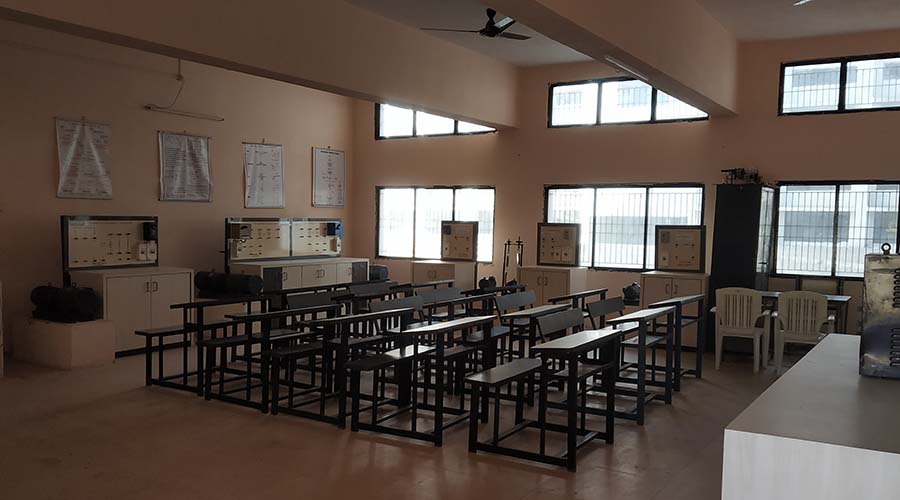
INFRASTRUCTURE
Name of The Lab
Area Covered (Square Mtr.)
Cost of the Lab
ELECTRICAL MEASUREMENT LAB
67.45
705331/-
CONTROL SYSTEM LAB
67.10
191143/-
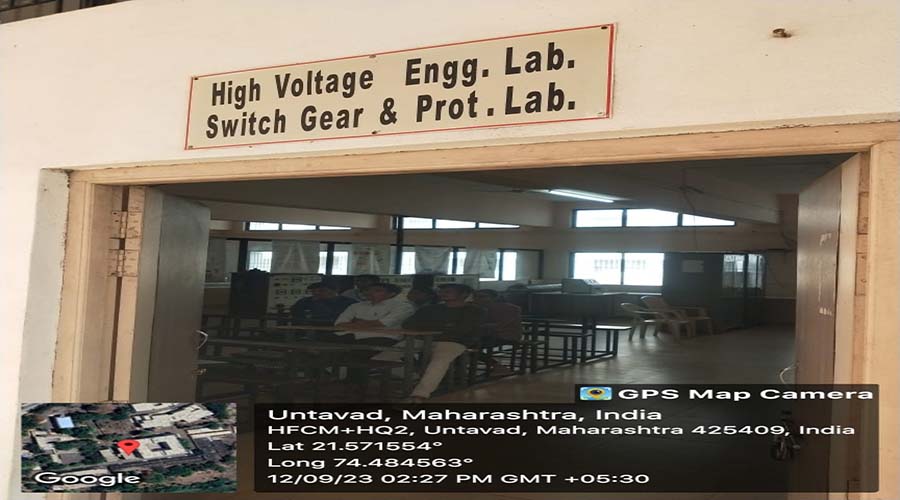
SWITCHGEAR & PROTECTION LAB/HIGH VOLTAGE LAB
67.10
515523/-
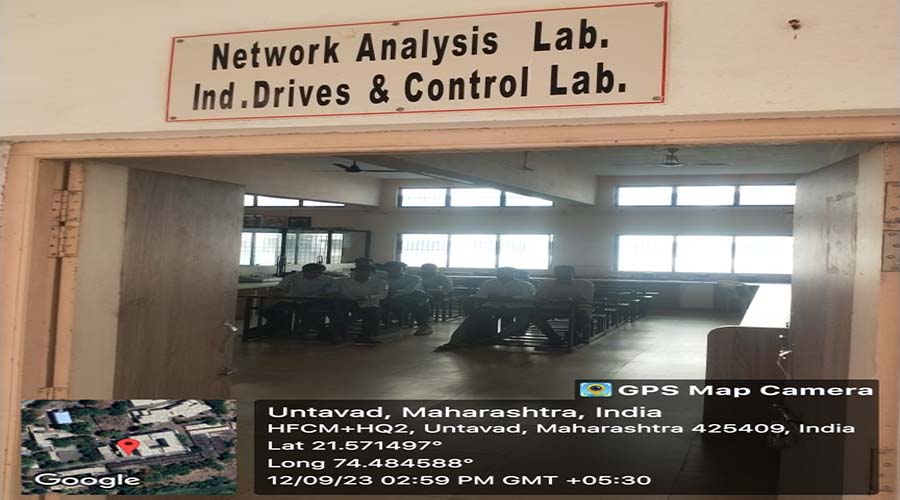
NETWORK ANALYSIS LAB/INDUSTRIAL DRIVES & CONTROL LAB
67.10
136447/-
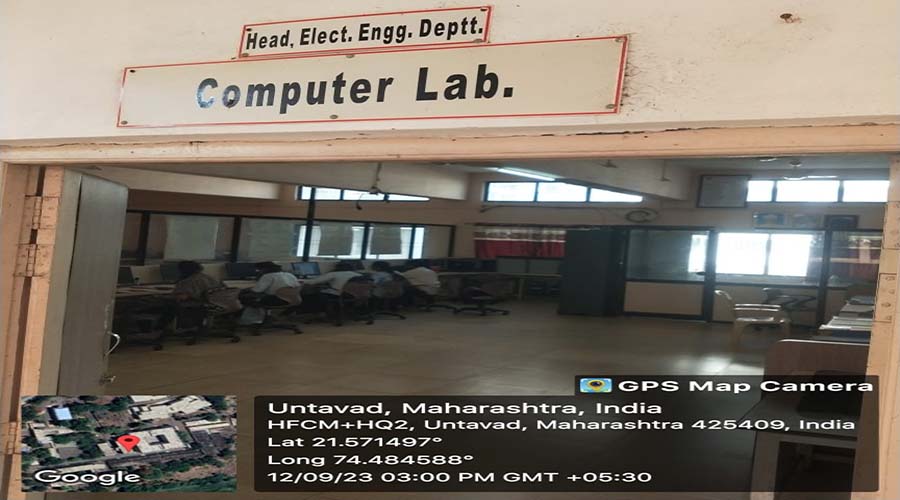
COMPUTER LAB
67.10
1114418/-
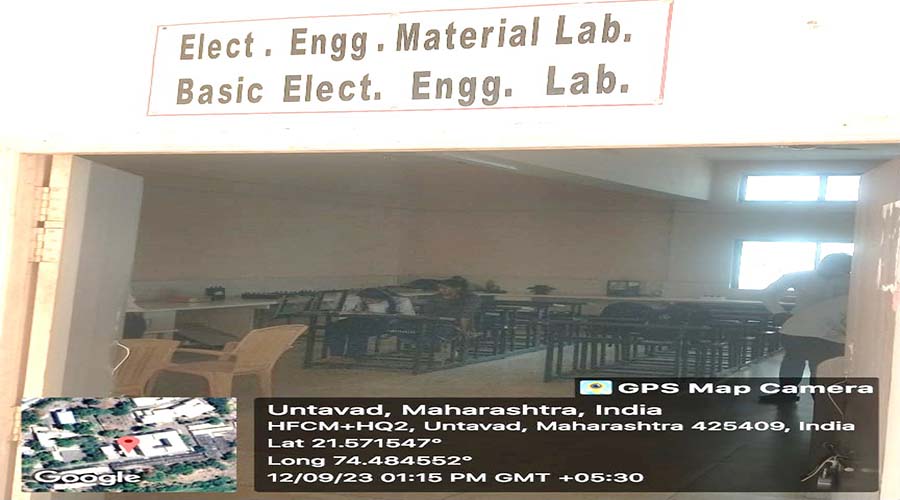
BASIC ELECTRICAL ENGINEERING LAB / MPMC LAB /ELECTRICAL ENGINEERING MATERIAL LAB
65.45
168679/-
ELECTRICAL MACHINE LAB
98.45
1421259/-
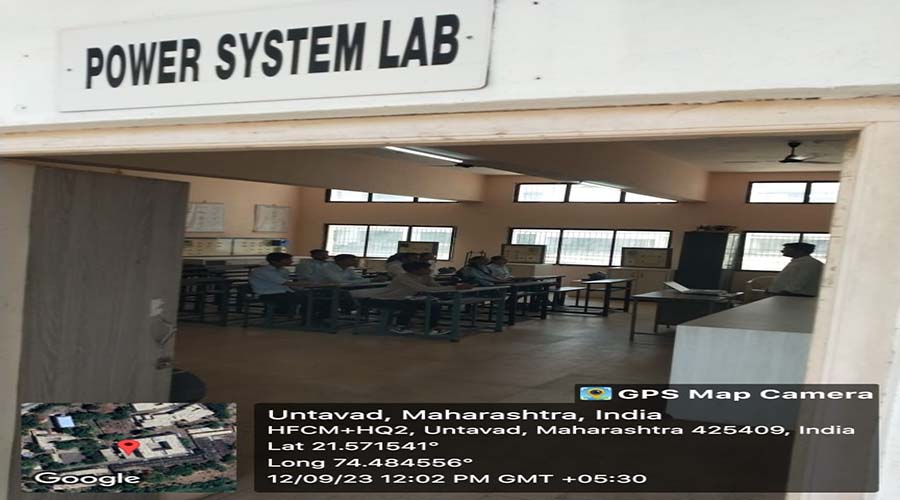
POWER SYSTEM LAB
98.10
442777/-
| Name of The Lab | Area Covered (Square Mtr.) | Cost of the Lab |
|---|---|---|
| ELECTRICAL MEASUREMENT LAB | 67.45 | 705331/- |
| CONTROL SYSTEM LAB | 67.10 | 191143/- |
| SWITCHGEAR & PROTECTION LAB/HIGH VOLTAGE LAB | 67.10 | 515523/- |
| NETWORK ANALYSIS LAB/INDUSTRIAL DRIVES & CONTROL LAB | 67.10 | 136447/- |
| COMPUTER LAB | 67.10 | 1114418/- |
| BASIC ELECTRICAL ENGINEERING LAB / MPMC LAB /ELECTRICAL ENGINEERING MATERIAL LAB | 65.45 | 168679/- |
| ELECTRICAL MACHINE LAB | 98.45 | 1421259/- |
| POWER SYSTEM LAB | 98.10 | 442777/- |
FACULTY MEMBERS

Prof. Prashant R. Patil
M.Tech (EPS), B.E. (EE)
Assistant Professor
Areas of Research:
1. Power quality
2. Power system protection
Experience : 17 Years
Faculty Profile

Prof. Pankaj Rangarao Patil
M.Tech (PS), B.E. (EE)
Assistant Professor
Areas of Research:
1. Hybrid Electric Vehicle
2. Power System
Experience : 14 Years
Faculty Profile

Prof. Vaibhav Subhash Kale
M.Tech (PS), B.E. (EE), Diploma(EE)
Assistant Professor
Areas of Research:
1. Renewable Energy Sources
2. Energy Audit & Conservation
Experience : 14 Years
Faculty Profile

Prof. Juned S. Shaikh
M.Tech (EPS), B.E. (Electrical)
Assistant Professor
Areas of Research:
1. Power System
2. IoT
Experience : 12.6 Years
Faculty Profile

Prof. Bhushan Aloni
M.Tech (EPS), B.E. (Electrical)
Assistant Professor
Areas of Research:
1. Power System
2. IoT
Experience : 11 Years
Faculty Profile
Prof. Anil P. Chaudhari
M.Tech (CTA), B.E.(Instrumentation)
Assistant Professor
Areas of Research :
1.
Experience: 1 Years
Faculty Profile
LABORATORIES
ELECTRICAL ENGINEERING LABORATORIES |
Download |